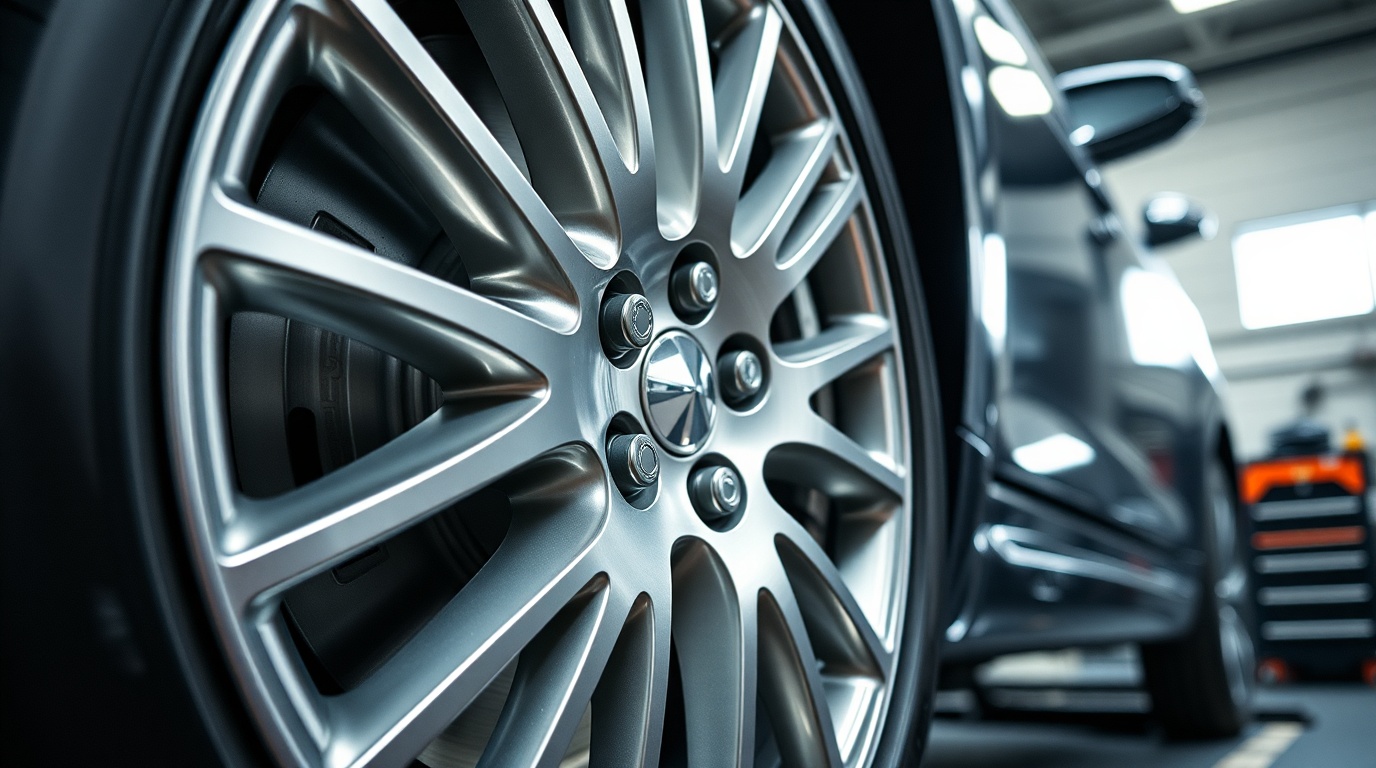
The short answer
Yes — a properly refurbished alloy passes an MOT, and a cosmetic refurbishment does not itself cause a failure. The MOT does not assess the cosmetic finish of a wheel; it checks that road wheels are secure, structurally sound and safe, and that the tyres meet the legal requirements. A wheel that has been refinished but is structurally fine will pass on that point. Where wheels do cause an MOT failure is when there is a structural problem — a crack, a wheel insecurely fitted, a damaged or distorted rim, or a related tyre defect. So a good refurbishment is irrelevant to the MOT in itself; it is the underlying condition of the wheel and tyre that matters.
A common worry is whether having alloys refinished affects the MOT. The reassuring answer is that the test is about safety and security, not appearance — but there are genuine wheel-related failure points worth knowing.
Refurbished alloys and the MOT
- Cosmetic finish checked?No — appearance isn't assessed
- What is checkedWheel security and structural condition
- TyresTread, condition and matching checked
- Causes a failCracks, insecure or damaged wheels
- A good refurbNeutral to pass — condition is what counts
What the MOT actually checks on wheels
The MOT test assesses road wheels and tyres for safety, not cosmetics. In broad terms, the inspection looks at whether each wheel is:
- Secure — correctly and safely attached, with no missing or insecure fixings.
- Structurally sound — not cracked, badly distorted or damaged in a way that affects safety.
- Fit for the tyre — the rim able to seat and seal the tyre properly.
Crucially, the MOT does not grade the paint, lacquer or kerb scuffs. A wheel with cosmetic kerb damage or a faded finish is not failed for that alone. By the same token, a freshly refurbished wheel is not 'passed' for being shiny — appearance simply is not part of the assessment. What counts is the structural and safety condition underneath the finish.
When wheels and tyres cause an MOT failure
Wheel- and tyre-related failures come from safety defects, not refinishing. Common examples:
| Issue | MOT outcome | Why |
|---|---|---|
| Cosmetic kerb scuffs / faded finish | Not a failure | Appearance isn't assessed |
| Cracked or badly distorted wheel | Fail | Structural safety defect |
| Insecure or missing wheel fixings | Fail | Wheel not safely attached |
| Tyre below legal tread depth | Fail | Tyre legal requirement |
| Tyre damage (cuts, bulges, cord) | Fail | Tyre safety defect |
| Wheel fouling / unsafe fitment | Fail / advisory | Could be unsafe in use |
Indicative guidance only. Refer to the official MOT inspection manual for definitive criteria.
Refurbishment, balancing and roadworthiness
Because the MOT is about safety, the relevant point for anyone refurbishing wheels is that the structural work is done properly, not the finish:
- A cosmetic refurbishment of a sound wheel has no negative effect on the MOT.
- If a wheel was cracked or buckled, the MOT cares about whether that has been properly addressed — a structural crack hidden under fresh paint is a roadworthiness problem, not a pass.
- After a refurbishment where tyres were removed and refitted, the wheels should be balanced. Balancing is about safe, smooth running rather than the MOT itself, but it is part of returning the car to good roadworthy condition.
The overall picture: refinishing alloys is a cosmetic and protective exercise that sits outside the MOT's scope. The test is satisfied by wheels that are secure, sound and carrying legal, undamaged tyres. Keep the structure right and the tyres legal, and the finish is simply not a factor.
Why the timing of a refurbishment and an MOT rarely clash
Owners sometimes plan a refurbishment around an upcoming MOT, in the belief that smartening the wheels up will help the car through. It is worth being clear that the two are essentially unrelated, which actually makes planning simpler:
- You do not need to refurbish before an MOT. Scuffed or faded alloys will not fail, so there is no test-driven reason to spend money on refinishing first. If the wheels are structurally sound, they pass regardless of how tired they look.
- A refurbishment will not rescue a structurally failing wheel. If a wheel is cracked or badly buckled, the answer is repair by a specialist or replacement, not a cosmetic refinish. Refinishing such a wheel and presenting it for MOT does not make it roadworthy and is potentially dangerous.
- If wheels come off for refurbishment, it is a sensible moment for a closer look. With the wheel stripped, a refurbisher is well placed to notice a crack, deep corrosion or bead-seat damage that might otherwise go unseen — which is useful information for roadworthiness even though it is separate from the MOT.
There is one indirect way a refurbishment can help a future MOT: by removing corrosion and resealing the wheel properly, it can prevent the kind of bead-seat deterioration that leads to a tyre slowly losing pressure. That is a genuine roadworthiness benefit, but it comes from the corrosion being removed, not from the cosmetic finish. The consistent theme is that the MOT judges the wheel and tyre on safety and security, and a refurbishment is only relevant insofar as it keeps the structure and the sealing surfaces sound. Treat the finish as a matter of appearance and protection, keep the structure and tyres right, and the MOT looks after itself.
It is also worth separating the MOT question from the broader question of roadworthiness, because the two are related but not identical. The MOT is a snapshot test on one day; roadworthiness is a continuous legal responsibility on the driver. A wheel can pass an MOT and still develop a problem the following week, and equally a wheel that would fail on safety grounds does not become safe just because the test is months away. So the sensible framing is not 'will my refurbished alloys pass the MOT?' but 'are my wheels and tyres genuinely sound and secure?'. If the answer to the second question is yes, the MOT follows naturally, and the cosmetic finish — refurbished or not — simply does not enter into it. Keeping that order of priorities straight is what stops owners spending money on appearance when the only thing the test actually cares about is safety.
Frequently asked questions
Does the MOT check the paint or finish on alloy wheels?
No. The MOT does not assess the cosmetic finish of wheels. Kerb scuffs, faded lacquer or a fresh refurbishment are not part of the test. The inspection looks at whether wheels are secure and structurally sound and whether the tyres meet legal requirements.
Can a cracked alloy fail an MOT even if it's been refinished?
Yes. A structural crack is a safety defect regardless of the finish over it. Painting over a crack does not make the wheel sound, and a cracked or badly distorted wheel can fail the MOT. The structural condition is what matters, not the appearance.
Will scuffed or kerbed alloys fail an MOT?
No, cosmetic kerb scuffs alone do not fail an MOT, because appearance is not assessed. A kerbed wheel only becomes an MOT concern if the damage is structural — a crack or significant distortion — or if it has damaged the tyre or affected how the tyre seals.
Sources & further reading
Figures on this page are typical UK ranges drawn from published sources and depend on your specific wheels. They are guidance, not a quotation.