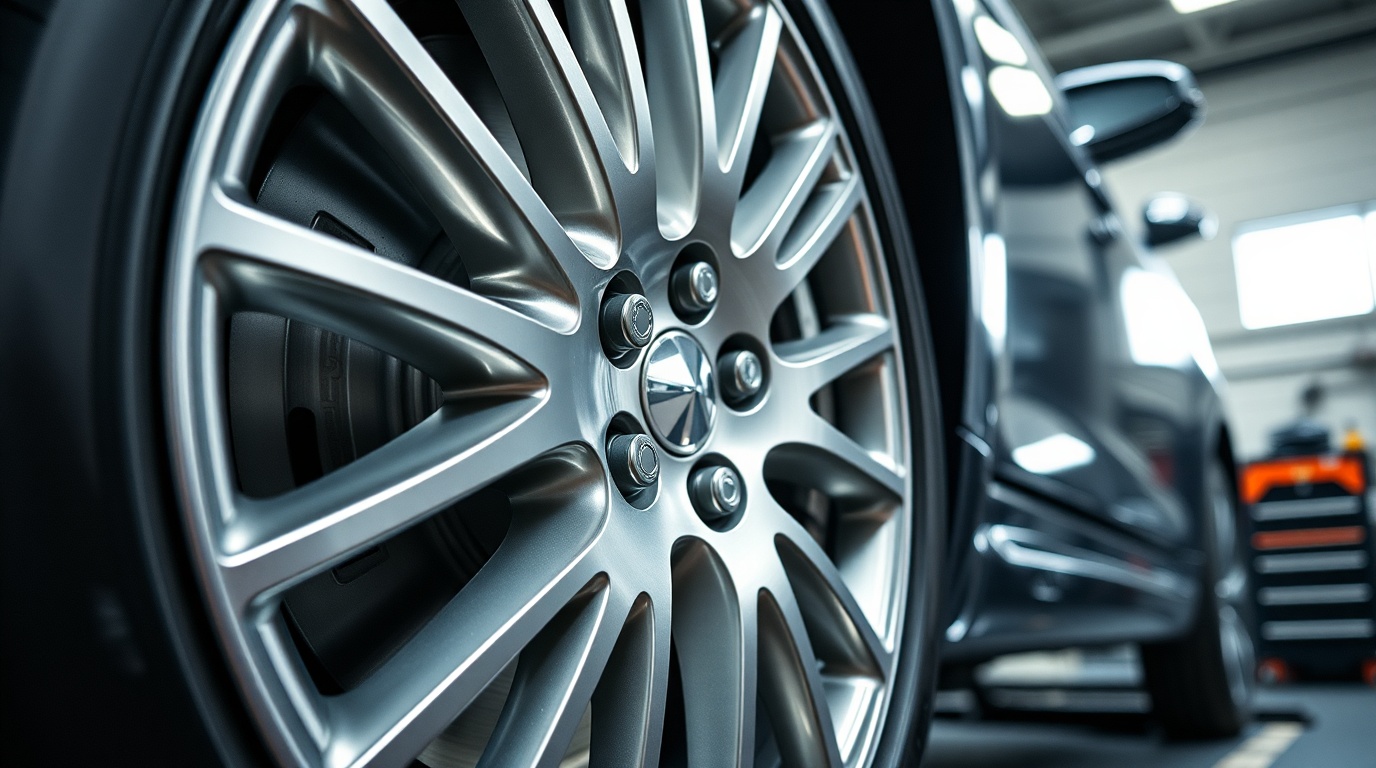
The short answer
Both produce a bright machined face, but they are not identical. An OEM (factory) diamond-cut finish is applied when the wheel is new, with the manufacturer's lacquer and process, and is matched precisely to the original design. An aftermarket diamond-cut repair re-cuts the existing face on a CNC lathe at a specialist refurbisher and re-lacquers it — restoring the look, but removing a thin layer of metal and limiting how many more times it can be re-cut. A good aftermarket re-cut can look very close to factory, but the cut pattern, lacquer and longevity can vary with the equipment and skill involved. OEM is the original benchmark; a quality aftermarket re-cut is the standard way to restore a kerbed or corroded diamond-cut wheel without buying new.
When a diamond-cut wheel is damaged, owners often weigh a factory-fresh OEM replacement against an aftermarket re-cut. The sections below compare them on look, durability and cost.
OEM vs aftermarket re-cut
- OEM finishFactory-applied, exact match
- Aftermarket re-cutLathe re-machine + re-lacquer
- Metal removedEach re-cut takes a layer
- Re-cut limitUsually 2–3 over wheel's life
- CostRe-cut cheaper than new OEM
How they compare
An OEM diamond-cut is the finish the wheel left the factory with; an aftermarket re-cut restores that look later using a refurbisher's lathe and lacquer. The table sets out the main differences. A skilled aftermarket re-cut can come very close to factory, but it is a restoration of an ageing wheel rather than a new one, and quality varies with the equipment and operator.
| Factor | OEM diamond-cut | Aftermarket re-cut |
|---|---|---|
| When applied | At manufacture, new wheel | At refurbishment, used wheel |
| Cut pattern | Factory specification | Specialist's lathe, can vary |
| Lacquer | Manufacturer's process | Refurbisher's lacquer |
| Metal removed | None (new) | A thin layer each re-cut |
| Re-cut life left | Full | Reduced by each cut |
| Cost | New wheel price | Cheaper than new |
Indicative comparison for guidance. Aftermarket results depend on equipment and operator skill.
Look, lacquer and durability
On appearance, a good aftermarket re-cut can be hard to tell from factory, because the lathe reproduces the bright machined face. The differences, where they exist, come down to the exact cut pattern a particular lathe and operator produce and how closely it matches the original groove spacing, and to the lacquer used. OEM wheels have the manufacturer's lacquer and process; a refurbisher uses their own, and the quality of that lacquer and its application strongly affects how long the restored face resists corrosion.
On durability, both OEM and re-cut diamond-cut faces share the same fundamental weakness: a thin lacquer over exposed metal that is prone to white worm corrosion in UK conditions once chipped. A quality re-cut with a well-applied lacquer can last well, but a poorly lacquered one will corrode sooner, which is why the choice of refurbisher matters. Neither OEM nor aftermarket diamond-cut is as hard-wearing as a powder coat — the durability gap is inherent to the diamond-cut finish, not to who applied it.
Cost and which to choose
On cost, an aftermarket re-cut is far cheaper than buying a new OEM diamond-cut wheel, which is why it is the standard way to restore a kerbed or corroded diamond-cut alloy. A new genuine OEM wheel gives a factory-fresh finish with full re-cut life ahead of it, but at new-wheel prices, so it is usually reserved for wheels that are beyond safe repair or have been re-cut to their limit.
The sensible approach is to use an aftermarket re-cut while the wheel still has re-cut life — typically two or three cuts across its life — and a reputable specialist with good equipment and lacquer. Once the face has been re-cut to its limit, the choice becomes converting to a durable powder-coated or painted finish, or replacing with a new OEM wheel for the factory look. If keeping the exact factory finish on a premium car matters most, OEM is the benchmark; if restoring the look at sensible cost is the goal, a quality aftermarket re-cut is the practical route. As with all diamond-cut work, the quality of the refurbisher's lacquer is what most affects how long the result lasts.
Frequently asked questions
Is an aftermarket diamond-cut repair as good as OEM?
A skilled aftermarket re-cut can look very close to factory, but it restores an ageing wheel rather than fitting a new one, and results depend on the lathe, operator and lacquer used. OEM is the original benchmark; a quality re-cut is the standard, cheaper way to restore a damaged diamond-cut wheel.
How many times can a diamond-cut wheel be re-cut?
Usually two or three times over its life. Each re-cut removes a thin layer of aluminium, so the re-cut life is finite. Once a wheel reaches that limit it should be converted to a painted or powder-coated finish, or replaced, rather than skimmed dangerously thin.
Does a re-cut diamond-cut wheel corrode as easily as OEM?
Both share the same weakness: a thin lacquer over exposed metal that can suffer white worm corrosion once chipped. A quality re-cut with well-applied lacquer can last well, but a poor one corrodes sooner, so the refurbisher's lacquer quality is the key factor in how long either lasts.
Sources & further reading
Figures on this page are typical UK ranges drawn from published sources and depend on your specific wheels. They are guidance, not a quotation.